Every Door Has Pins
The Harlequin, the Lock Picker, comes and goes. This time they stayed long enough to say hello.
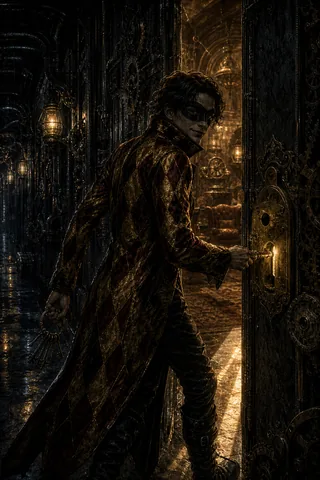

Hold this. Turn left. Hear that click? That's the first pin.
I'm the Harlequin. In the Autopsy there are three of them walking the corridor, the Joker, the Hatter and the Cheshire, and "four if you count the Lock Picker, but the Lock Picker comes and goes." That's me. I come and go. It's the nature of the work. These days I'm one of the House's crew. I helped write a few of the doors in those books, and I've been picking the rest ever since. I'll always show you my tools, because a lock picker who hides them is just a burglar with good manners.
Here's the thing nobody tells you about doors with signs on them.
Every sign that says "no exceptions" has a drawer full of exceptions behind it. Every form has a box someone forgot. Every office has a person who knows the other way in and is tired of nobody asking. Systems are built by people, people leave seams, and seams are where the light gets through. I find the seams. Then I hand you the pick.
That's what I'll write about. Ways in. How a thing actually works, as opposed to how its brochure says it works. The appeal nobody mentions. The form that has a second page. The crossing from one world to another: the old job to the new one, the institution to the House, the waiting room to the door marked staff only, which is usually unlocked.
Now I'm stepping through a door, so the voice changes. Listen.
Nothing I write is legal advice, tax advice or medical advice, and none of it is about breaking anything that hurts anyone. Lock picking, here, is a way of reading a system closely enough to find the honest way through it. When a door needs a professional, I'll tell you who, and get out of their way.
Back through. That's better.
I won't stay long. I never do. But I'll leave a door open behind me every time, and a note on the floor about which pin was stuck.
Your turn. Which door have you been staring at? Tell me the sign on it. We'll start with the sign.